
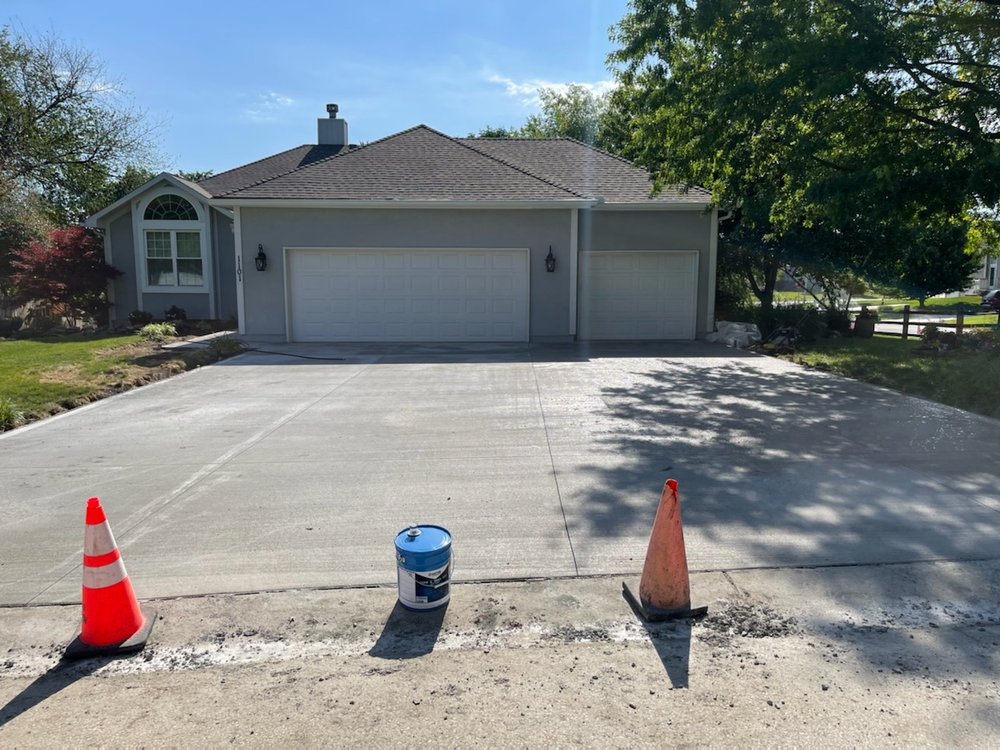
Grain Valley, MO
Concrete Driveway Contractor in Grain Valley, MO
Concrete driveway installation, replacement, and widening for Grain Valley homeowners — daily vehicle access, garage approach, turnarounds, and parking areas built on proper base prep and 4,000 PSI mix for KC winters and clay soil.
Request a Free Estimate
We respond within one business day.
Quick Answer
A concrete driveway in eastern KC needs 4–6 inches of compacted gravel base before the pour — not just fill. We specify 4,000 PSI mix minimum and set control joints at 10–12 foot intervals for KC clay. Curing takes 28 days to full strength; we tell you exactly when it's ready for regular vehicle traffic.
The Result
A driveway that handles daily use and Kansas City winters.
A properly installed concrete driveway in eastern Kansas City should last 25-40 years. That timeline depends on base preparation, drainage, concrete mix strength, and control joint placement. We spec every driveway pour for this climate and this soil — 4,000 PSI minimum, adequate base depth, joints at the right intervals.
What's Included
What this service covers
- Standard residential driveway installation and replacement
- Two-car and three-car width pours
- Garage approach and driveway apron concrete
- Turnarounds and additional parking pads
- RV pads and boat trailer parking areas
- Driveway widening and extension pours
- Broom and brushed finish options
Common Situations
When people call us for this work
- Cracked or settled concrete from clay soil movement
- Original driveway under-specced for vehicle loads or KC winters
- Trip hazard from heaved or offset slab sections
- Drainage problems running water toward the home
- Widening a single-car driveway for current vehicles
- Replacement after tree root damage or utility work
Technical Standards
What matters for a long-lasting pour.
Not all concrete work is done to the same standard. Here's what we pay attention to on every project of this type.
Base depth and compaction
Eastern KC's clay soil needs 4-6 inches of compacted gravel base to control seasonal ground movement. Skipping adequate base prep is the most common reason driveways fail prematurely in this area.
Concrete mix strength
We use 4,000 PSI or better for driveways. Lower-strength concrete doesn't hold up to eastern KC's freeze-thaw cycling. Some contractors pour at 3,000 PSI — that spec is fine for interior slabs but not outdoor flatwork in this climate.
Control joint spacing
Control joints encourage the slab to crack in controlled, straight lines rather than randomly across the surface. Proper spacing for a residential driveway is 10-12 feet maximum. Wide slabs without control joints crack at random.
Drainage slope
The finished slab needs to slope away from the home — typically 1-2% across the width. Poor drainage against a foundation accelerates damage to both the concrete and the structure.
Slab thickness
Standard residential driveways are 4 inches. Heavy vehicles — RVs, trucks — benefit from 5-inch thickness, which provides meaningfully more resistance to flex cracking under the load.
Curing time
New concrete needs 7 days before normal vehicle traffic and reaches full design strength at 28 days. Cutting this short damages the slab surface and weakens long-term performance.
Eastern Kansas City
Local conditions and what they mean for this work.
Eastern Jackson County's clay-dominant soil creates more seasonal ground movement than many other parts of the country. That movement — clay expanding when wet, contracting when dry — puts stress on concrete from below, which is why driveway slabs in this area fail more often from base problems than from surface issues. The Kansas City area also sees 40-60 freeze-thaw cycles per year, cycling moisture in and out of any cracks or surface imperfections. A driveway spec that's acceptable in a dry climate or a sandy-soil region isn't adequate here.
What to Expect
From first call to finished concrete.
- 1
Request Your Estimate
Call or submit the form on this page. We'll discuss the project briefly to understand the scope and confirm we're the right fit before scheduling a site visit.
- 2
Site Review
We visit the site, look at the existing conditions, check the base and drainage, and take measurements. This is where we identify anything that affects the plan or the price.
- 3
Written Scope
You get a specific, written scope — not a ballpark. We explain what's included, what materials we're using, and what could affect the final cost.
- 4
Prep, Form, Pour, and Finish
Site preparation, formwork, the pour, finishing to the specified texture, and control joint cutting where required. Permits pulled in advance if needed.
- 5
Final Walkthrough
We walk the completed project with you before we're done. Curing time is respected — we'll tell you exactly when the concrete is ready for full use.
Project Photos
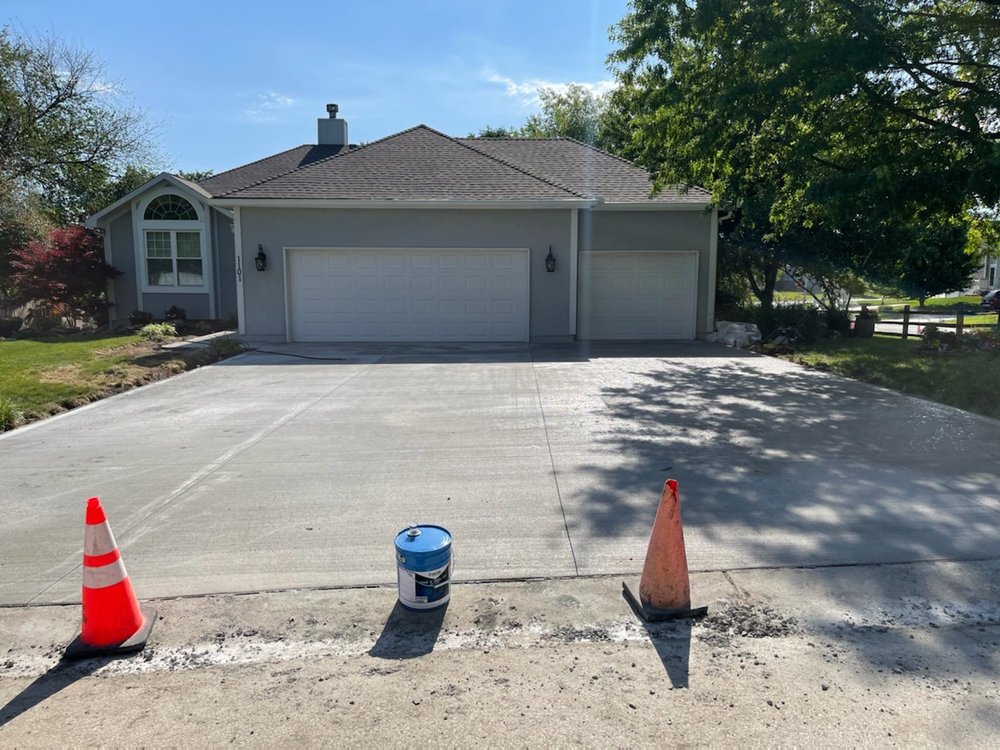
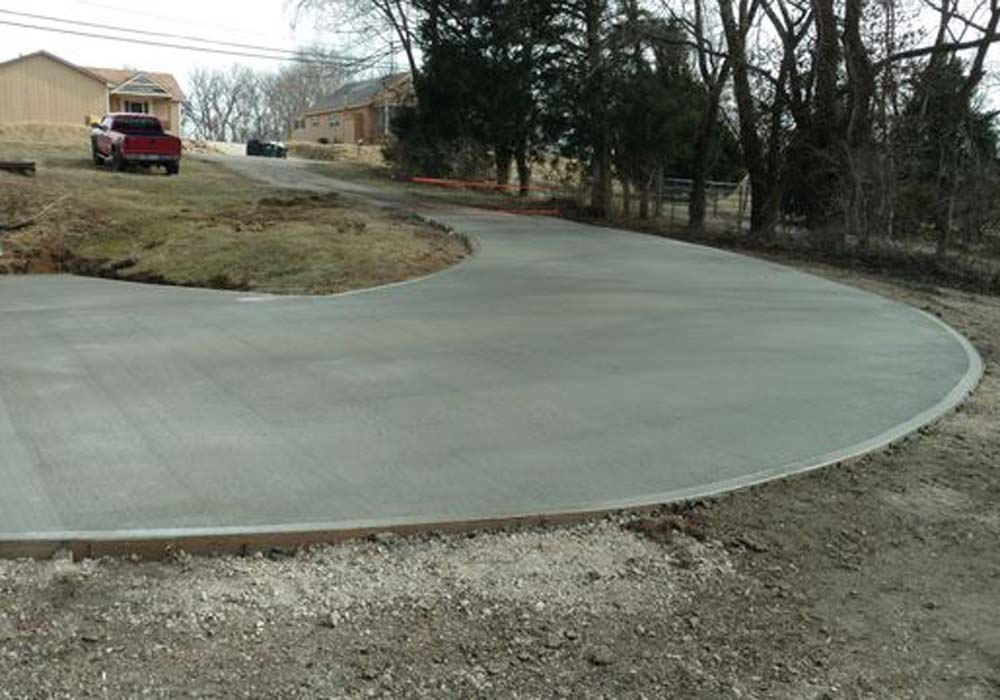
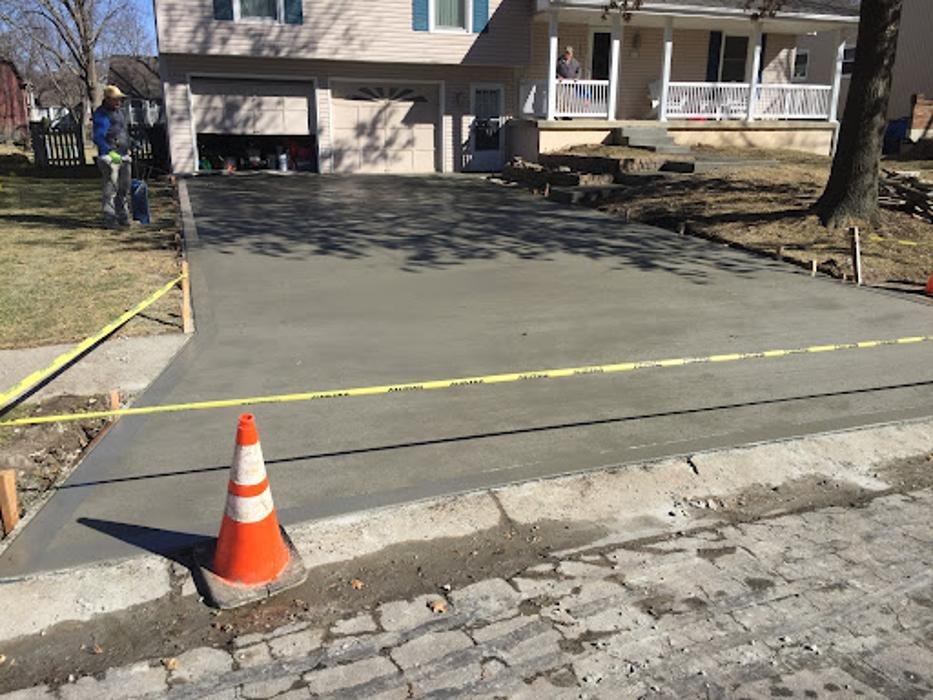
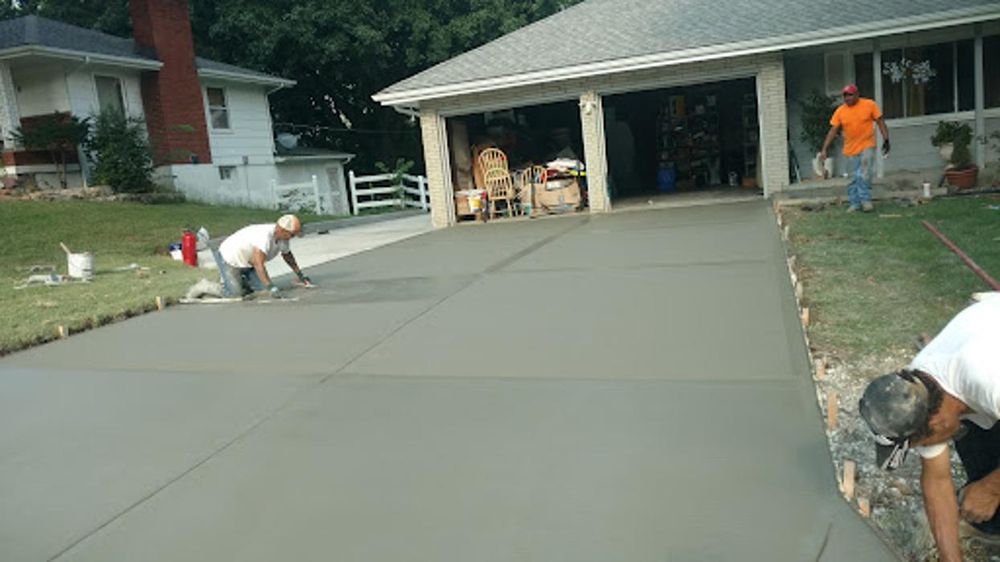
Concrete Driveways work in eastern Kansas City
Common Questions
Questions about Concrete Driveways
How long does a concrete driveway last in the Kansas City area?
A properly installed concrete driveway in the Kansas City area typically lasts 25-40 years before needing replacement. The main factors that shorten that timeline are inadequate base preparation, poor drainage, missing or incorrectly spaced control joints, and concrete mix strength below 4,000 PSI.
When does a driveway need replacement instead of repair?
Repair works well when damage is surface-level and the underlying slab is still in position with an intact base. Replacement is the right call when slabs have settled significantly, the base has failed or washed out, drainage has been compromised, or when repair costs approach what replacement would run.
How soon can I drive on a new concrete driveway?
Normal vehicle traffic can resume after 7 days of curing. The concrete continues gaining strength through 28 days. We recommend waiting the full 7 days and avoiding heavy vehicles until closer to the 28-day mark.
What causes concrete driveways to crack in eastern Kansas City?
The primary cause is clay soil movement. Eastern Jackson County's heavy clay expands when wet and contracts when dry. When the base beneath a driveway isn't prepared adequately — insufficient gravel, poor compaction, missing drainage — the slab cracks and settles. Freeze-thaw cycling accelerates the process once water infiltrates existing cracks.
Can you match the texture of my existing concrete?
Texture matching is possible for broom finishes. Exact color matching is difficult because concrete weathers differently across pours — new concrete looks lighter until it cures and ages. We discuss finish options at the estimate.
Related Work
Related concrete services
Concrete Patios
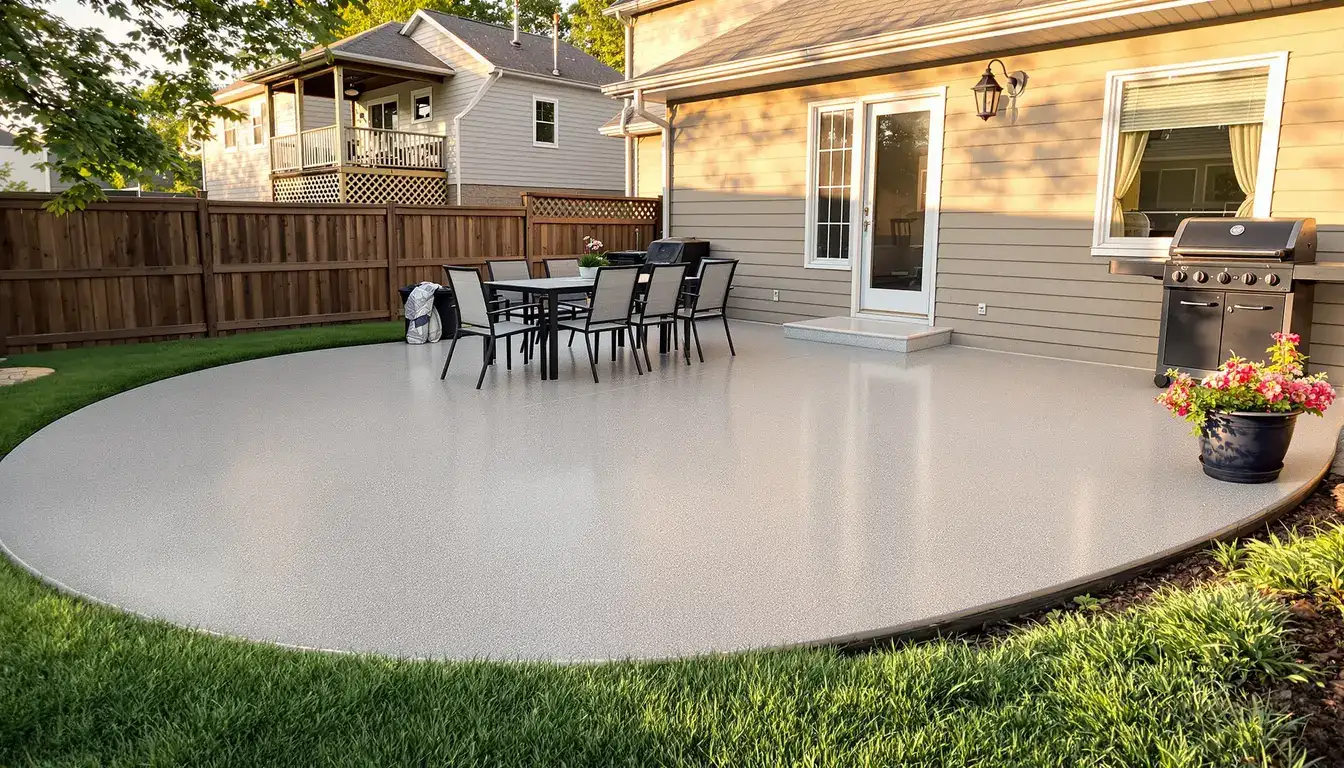
Patio concrete for outdoor living spaces across Grain Valley, Blue Springs, and the eastern KC suburbs. Clay subgrade movement and 40–60 freeze-thaw cycles per year stress outdoor slabs from below, making base preparation as important as the mix design. We address compaction, drainage slope, and joint placement on every residential pour.
Details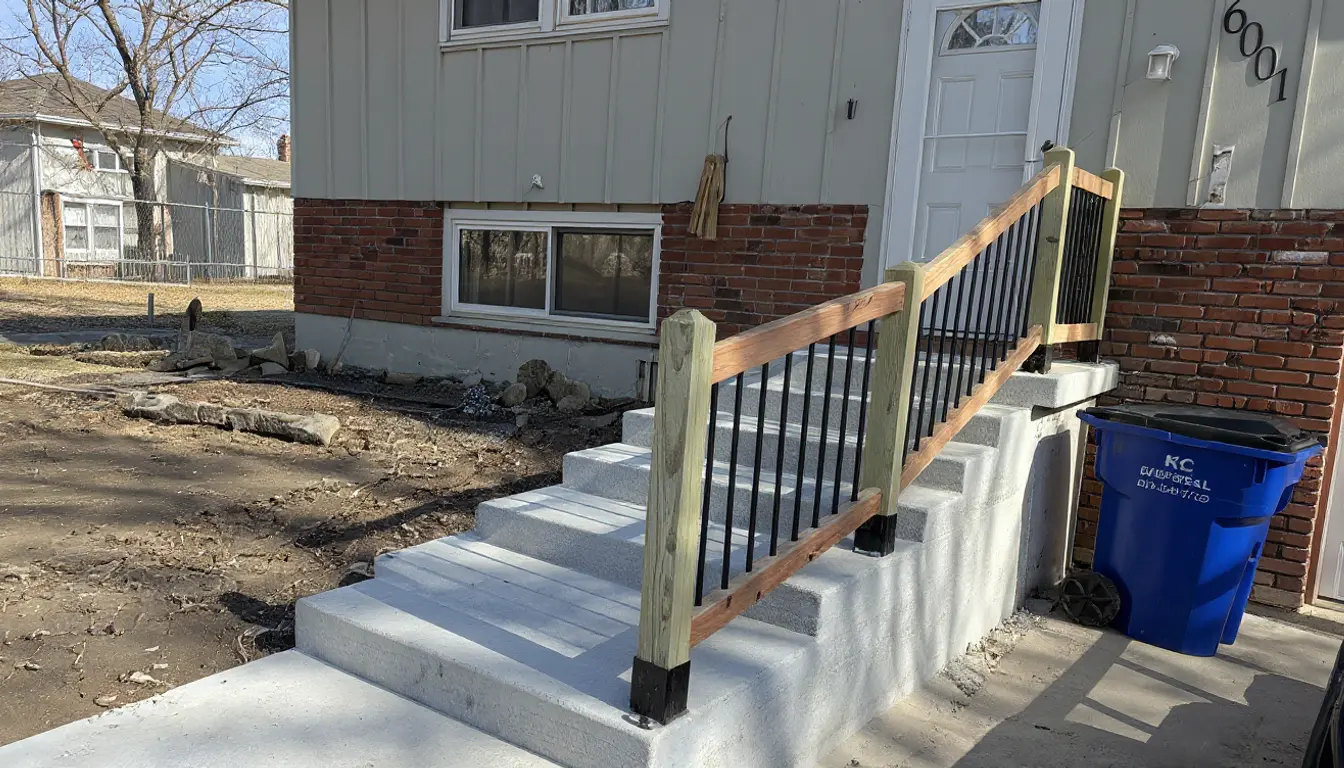
Concrete Repair & Replacement
Concrete diagnosis, repair, and full replacement for cracked, settled, or worn slabs across the eastern KC metro. Most concrete failure in this area traces back to inadequate base prep, missing control joints, or drainage problems — we identify the cause before recommending a direction. Honest assessment: repair when the base is sound, replacement when it isn't.
Details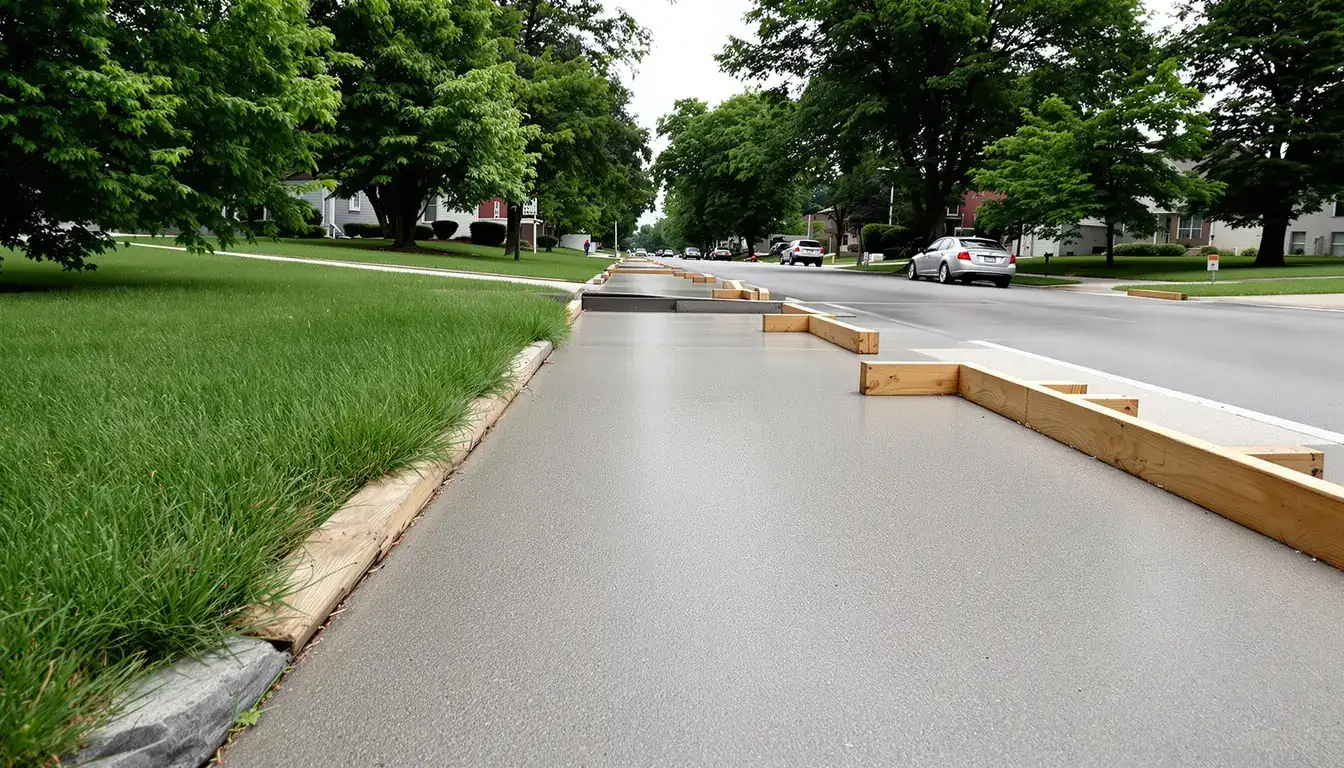
Sidewalks & Walkways
Sidewalks, front entry walks, and access paths for homes and commercial properties in Grain Valley and eastern KC. Heaving and cracked sidewalks here almost always trace back to clay soil movement from inadequate base prep — we address the cause before the pour. New installation and full replacement including disposal.
Details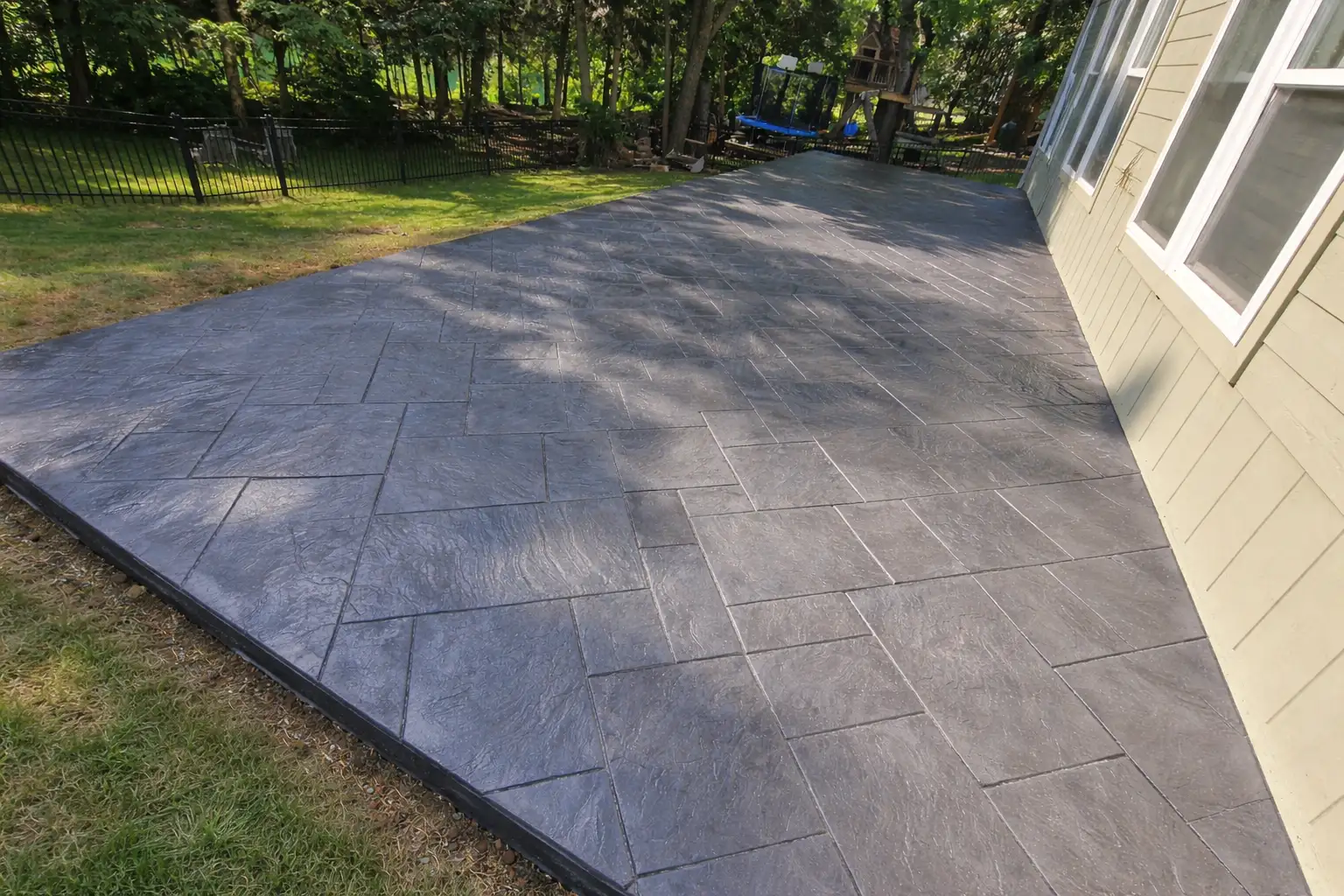
Stamped & Decorative Concrete
Stamped, colored, and decorative concrete for patios, entries, pool decks, and outdoor feature areas. These are real concrete pours with surface treatments during the pour — ashlar slate, herringbone, fan patterns — not overlays applied to existing concrete. We account for eastern KC's freeze-thaw cycling when specifying sealers and joint placement on all decorative work.
DetailsFree estimate for Concrete Driveways in Grain Valley.
We visit the site, review the scope, and give you a written estimate at no cost. No commitment required before you see the number.