Grain Valley, MO
Concrete Retaining Wall Contractor in Grain Valley, MO
Concrete retaining walls for Grain Valley and eastern Kansas City properties — grade changes, sloped yard stabilization, patio leveling, and landscape structure that holds up in eastern KC's clay soil conditions.
Request a Free Estimate
We respond within one business day.
The Result
Usable yard and defined landscape structure.
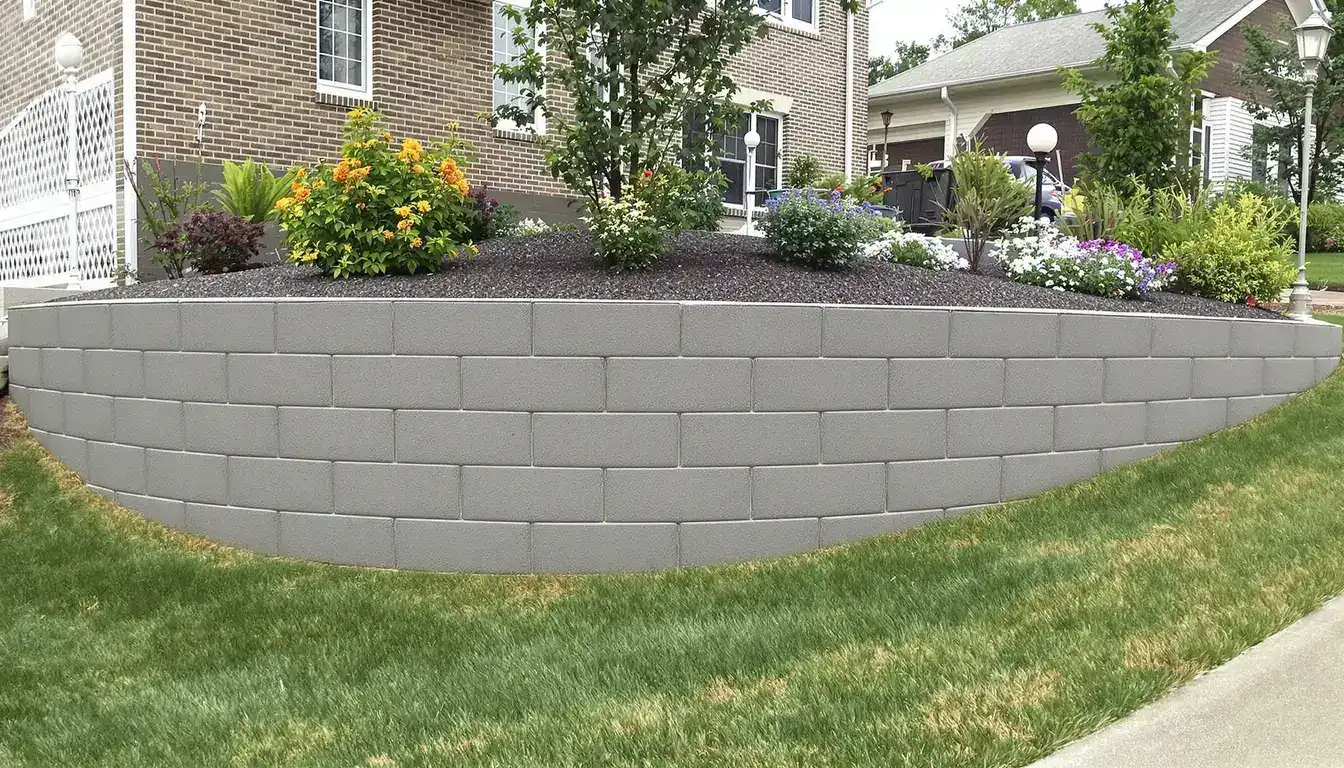
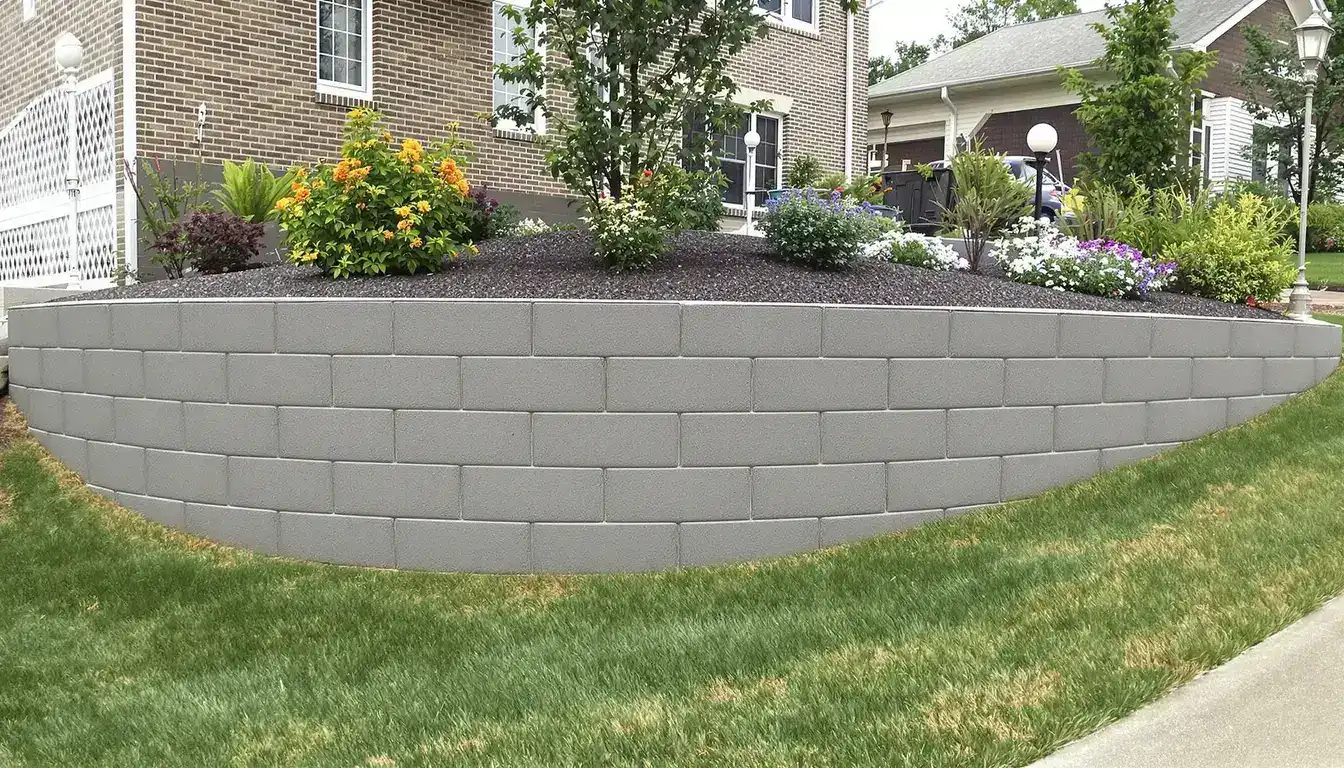
A retaining wall turns unusable sloped ground into defined, level spaces. Done in concrete — whether poured concrete or concrete block — the wall resists the soil pressure and drainage forces that cause other wall materials to shift or fail in clay soil over time.
What's Included
What this service covers
- Concrete block retaining walls for residential properties
- Poured concrete retaining walls for larger scopes
- Grade change walls for sloped backyards
- Patio leveling walls to create flat outdoor space
- Landscape separation and garden bed definition
- Driveway cut walls and approach grade changes
- Multi-tiered terracing for steep slopes
Common Situations
When people call us for this work
- Creating usable flat space from a sloped backyard
- Leveling an area for a patio or outdoor living space
- Stabilizing a slope that has been eroding or shifting
- Separating landscape elevation changes with a finished edge
- Replacing a failing wood or block wall
- Managing water runoff across a sloped lot
Technical Standards
What matters for a long-lasting pour.
Not all concrete work is done to the same standard. Here's what we pay attention to on every project of this type.
Drainage behind the wall
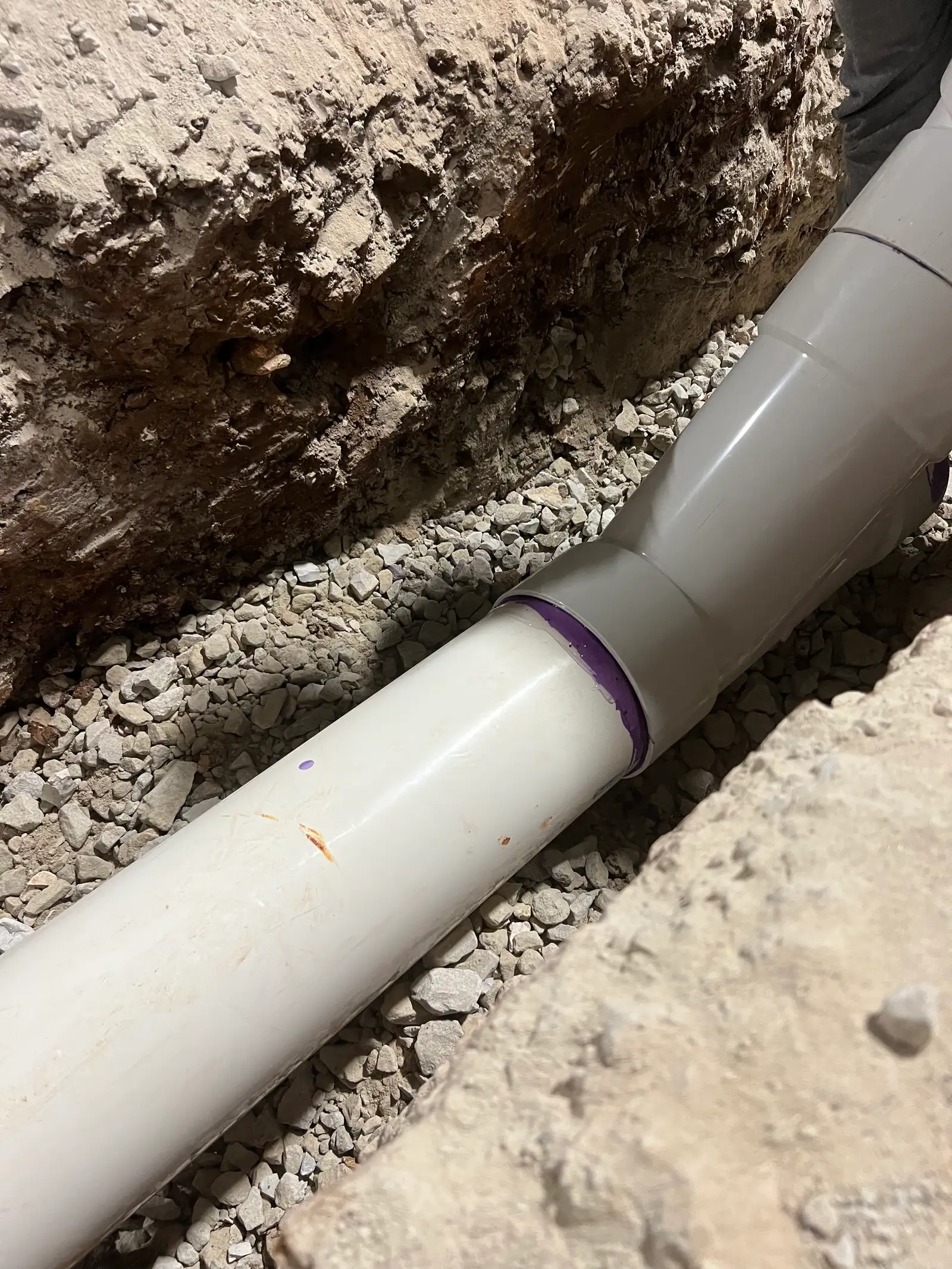
Retaining walls in clay soil need proper drainage behind them. Clay that stays saturated creates significant hydrostatic pressure against the wall. We address drainage at installation — weep holes, gravel backfill, or drainage pipe depending on the scope.
Wall height and permits
Walls over 4 feet typically require engineering review or a building permit. We assess wall height requirements at the estimate and flag any permit requirements.
Footing depth
Retaining wall footings in eastern KC's climate need adequate depth — below the frost line to prevent heaving. Walls built on footings that aren't deep enough will move seasonally.
Wall type for the application
Poured concrete walls, concrete block, and segmental retaining wall block each have different applications and appearances. Soil type, wall height, and site conditions determine which is appropriate.
Soil load
The taller the wall and the heavier the soil above, the more structural the wall needs to be. Walls retaining heavy clay soil need to be sized for that specific load.
Tie-ins to adjacent surfaces
Retaining walls often work with a patio pour or walkway above or below. Planning the wall and surrounding concrete together produces better results than adding one after the other.
Eastern Kansas City
Local conditions and what they mean for this work.
Eastern KC's heavy clay soil creates more lateral pressure against retaining walls than sandier soils do. Clay also drains slowly, meaning water can build up behind a retaining wall during heavy rain and stay there longer. Retaining walls in this area need proper drainage features built in — not assumed — to avoid wall failure from hydrostatic pressure. This is particularly true for walls over 3 feet or walls in areas that receive significant surface drainage.
What to Expect
From first call to finished concrete.
- 1
Request Your Estimate
Call or submit the form on this page. We'll discuss the project briefly to understand the scope and confirm we're the right fit before scheduling a site visit.
- 2
Site Review
We visit the site, look at the existing conditions, check the base and drainage, and take measurements. This is where we identify anything that affects the plan or the price.
- 3
Written Scope
You get a specific, written scope — not a ballpark. We explain what's included, what materials we're using, and what could affect the final cost.
- 4
Prep, Form, Pour, and Finish
Site preparation, formwork, the pour, finishing to the specified texture, and control joint cutting where required. Permits pulled in advance if needed.
- 5
Final Walkthrough
We walk the completed project with you before we're done. Curing time is respected — we'll tell you exactly when the concrete is ready for full use.
Project Photos
Retaining Walls work in eastern Kansas City
Common Questions
Questions about Retaining Walls
Do I need a permit for a retaining wall in Grain Valley?
Walls under 4 feet in height typically don't require a permit in most municipalities. Walls over 4 feet, walls adjacent to property lines, or walls that affect drainage may require a permit and possibly engineering review. We flag requirements at the estimate.
How long does a concrete retaining wall last?
A properly built concrete or concrete block retaining wall should last 50+ years. The main failure modes are drainage-related — walls without adequate drainage behind them fail faster because of hydrostatic pressure and freeze-thaw cycling in saturated backfill.
What's the difference between concrete block and poured concrete for retaining walls?
Concrete block is common for residential applications up to moderate heights — flexible to install, good drainage characteristics, and works well with most residential landscapes. Poured concrete walls are stronger per foot but require forming and a different installation process. Application determines which is appropriate.
Can you build a retaining wall and a patio at the same time?
Yes. When both are needed, building them together is more efficient and produces better results — the wall height, drainage, and patio grade can all be planned in one scope. This is common for backyard leveling projects.
What causes retaining walls to fail?
The most common causes are inadequate drainage behind the wall (hydrostatic pressure), insufficient footing depth (frost heave), and walls under-sized for the soil load they're retaining. In eastern KC's clay soil, drainage is the most common issue.
Related Work
Related concrete services
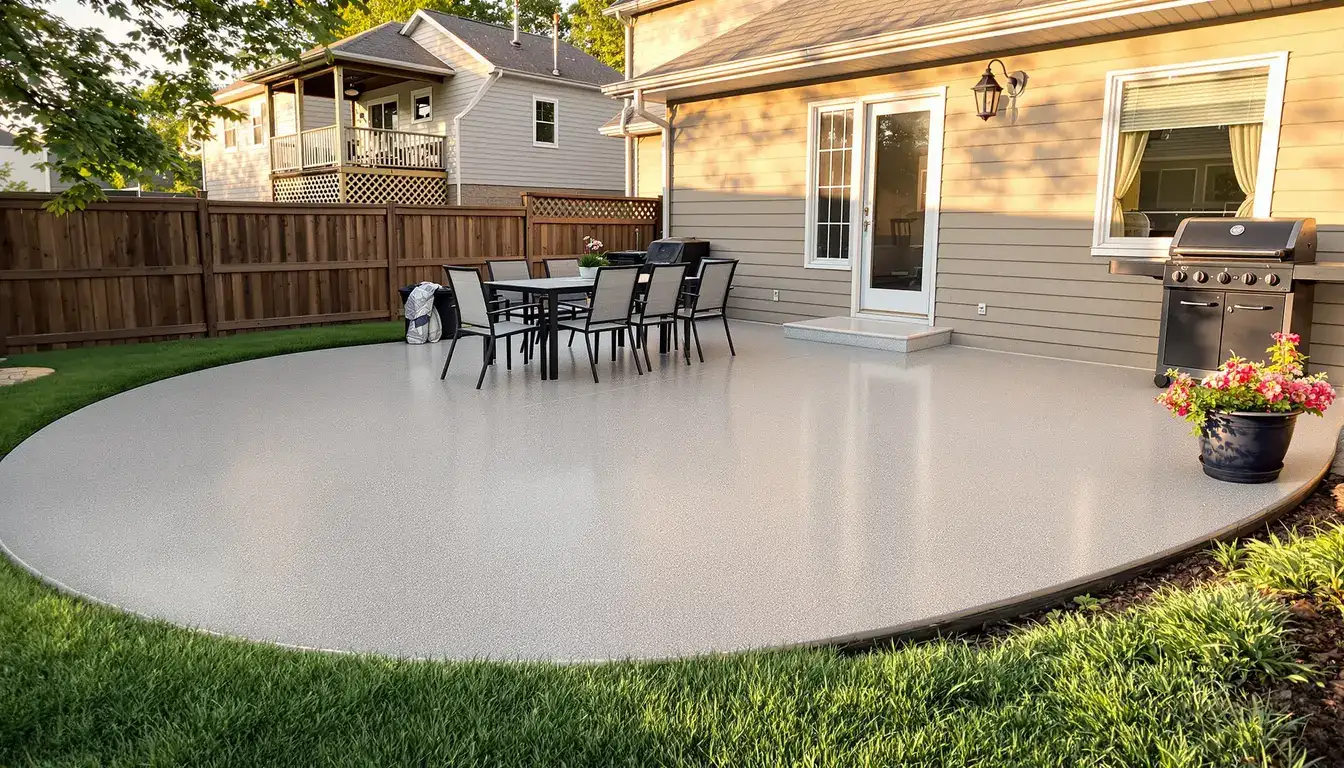
Concrete Patios
Patio concrete for outdoor living spaces across Grain Valley, Blue Springs, and the eastern KC suburbs. Clay subgrade movement and 40–60 freeze-thaw cycles per year stress outdoor slabs from below, making base preparation as important as the mix design. We address compaction, drainage slope, and joint placement on every residential pour.
Details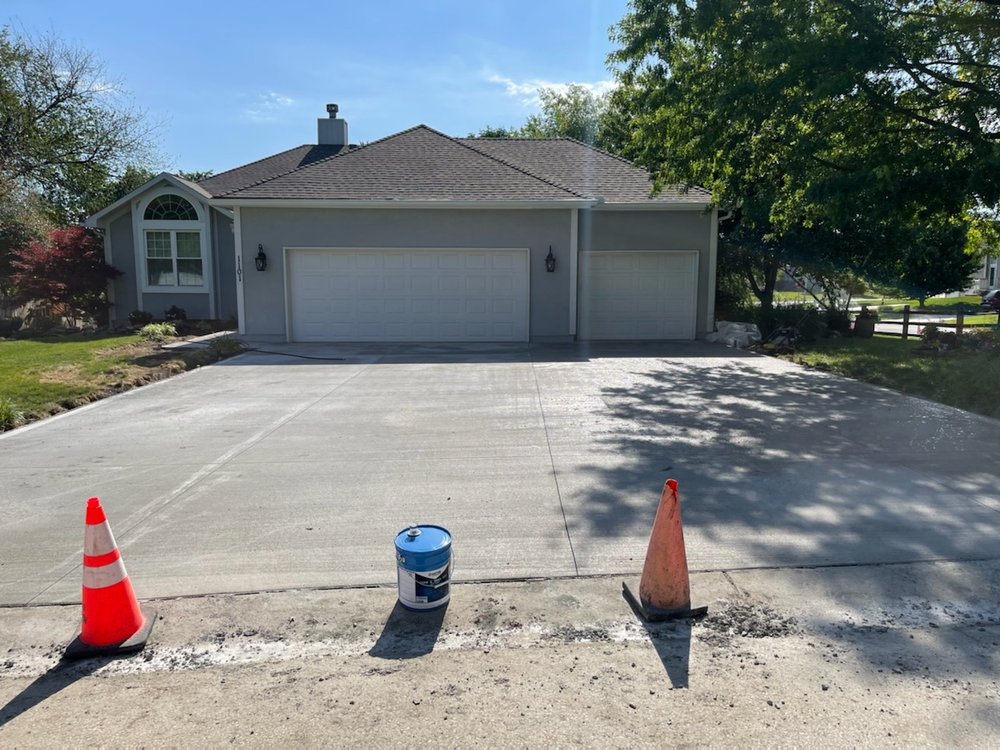
Concrete Driveways
New driveway installation and full replacement for Grain Valley homeowners and properties across the I-70 corridor. Eastern Jackson County's Putnam clay loam expands several inches seasonally — which is why we specify 4–6 inches of compacted gravel base and 4,000 PSI mix on every pour. Control joints at 10–12 foot intervals and proper drainage slope round out a slab built to last 30+ years in eastern KC winters.
Details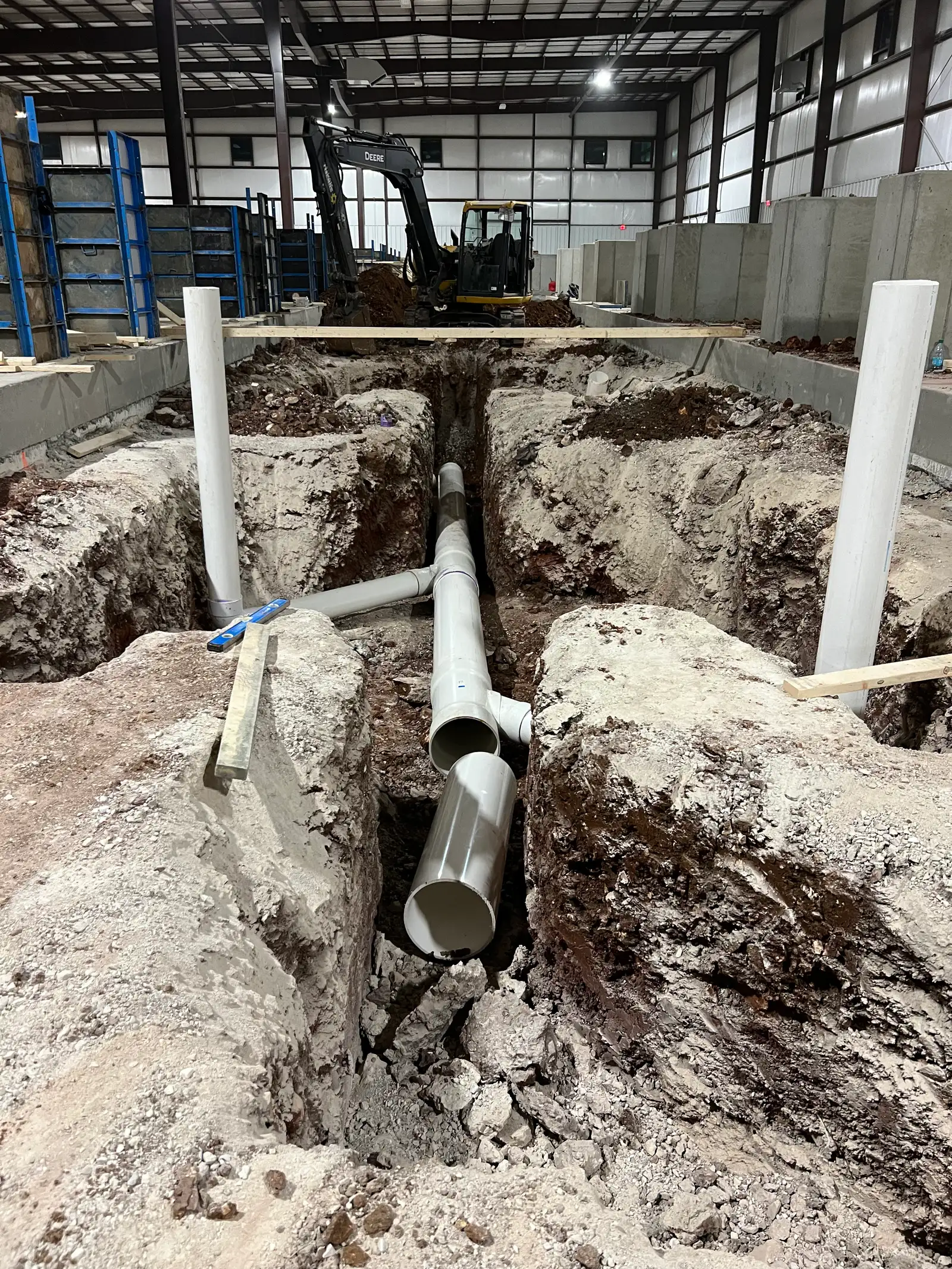
Foundations & Sitework
Foundation slabs, grade beams, and commercial sitework for construction and expansion projects along the I-70 corridor. Eastern Jackson County's clay soil requires careful subgrade preparation — improper compaction can cause differential settlement that damages the entire structure. We work with builders, developers, and property owners on both new construction and expansion scopes.
Details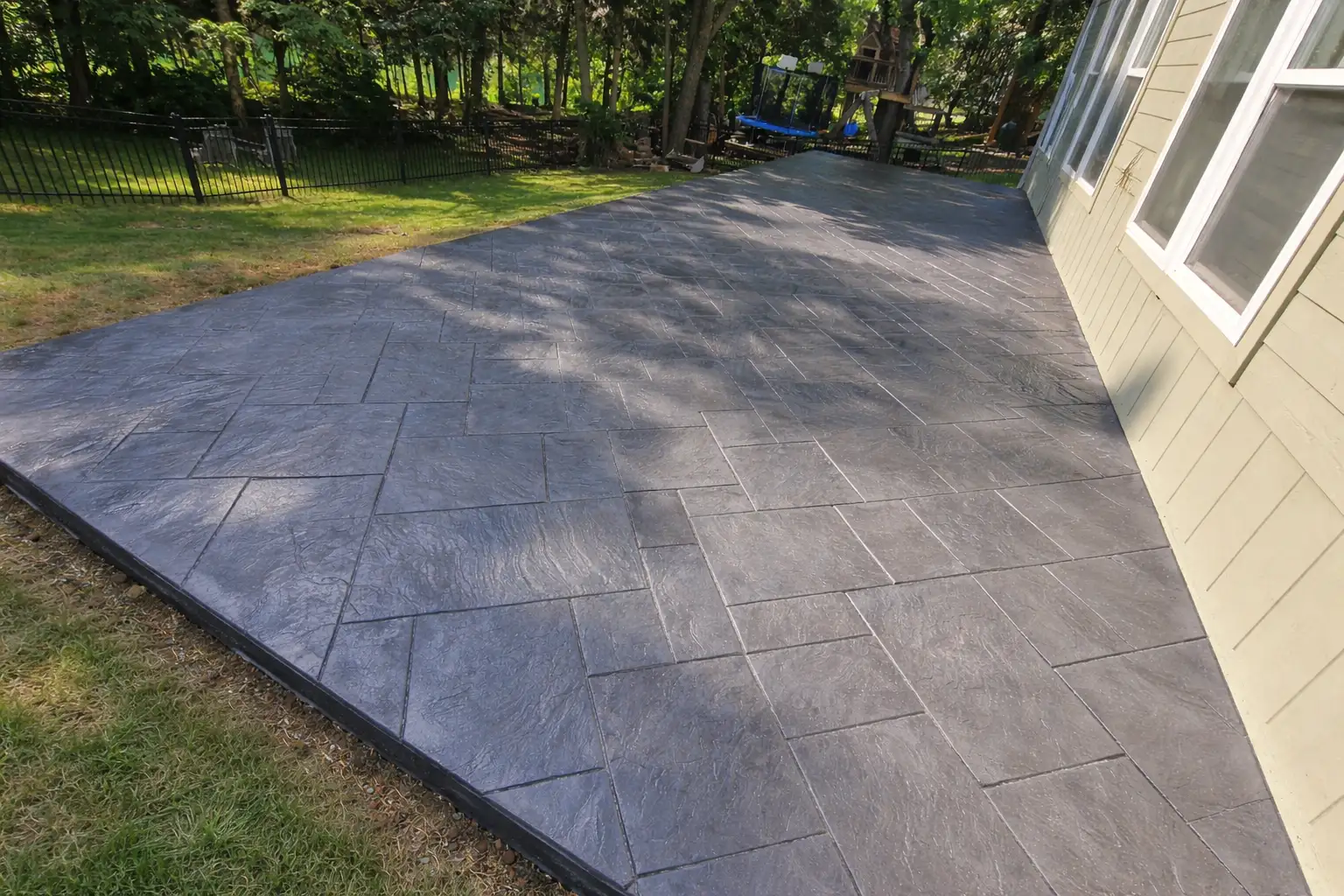
Stamped & Decorative Concrete
Stamped, colored, and decorative concrete for patios, entries, pool decks, and outdoor feature areas. These are real concrete pours with surface treatments during the pour — ashlar slate, herringbone, fan patterns — not overlays applied to existing concrete. We account for eastern KC's freeze-thaw cycling when specifying sealers and joint placement on all decorative work.
DetailsFree estimate for Retaining Walls in Grain Valley.
We visit the site, review the scope, and give you a written estimate at no cost. No commitment required before you see the number.